Introduction
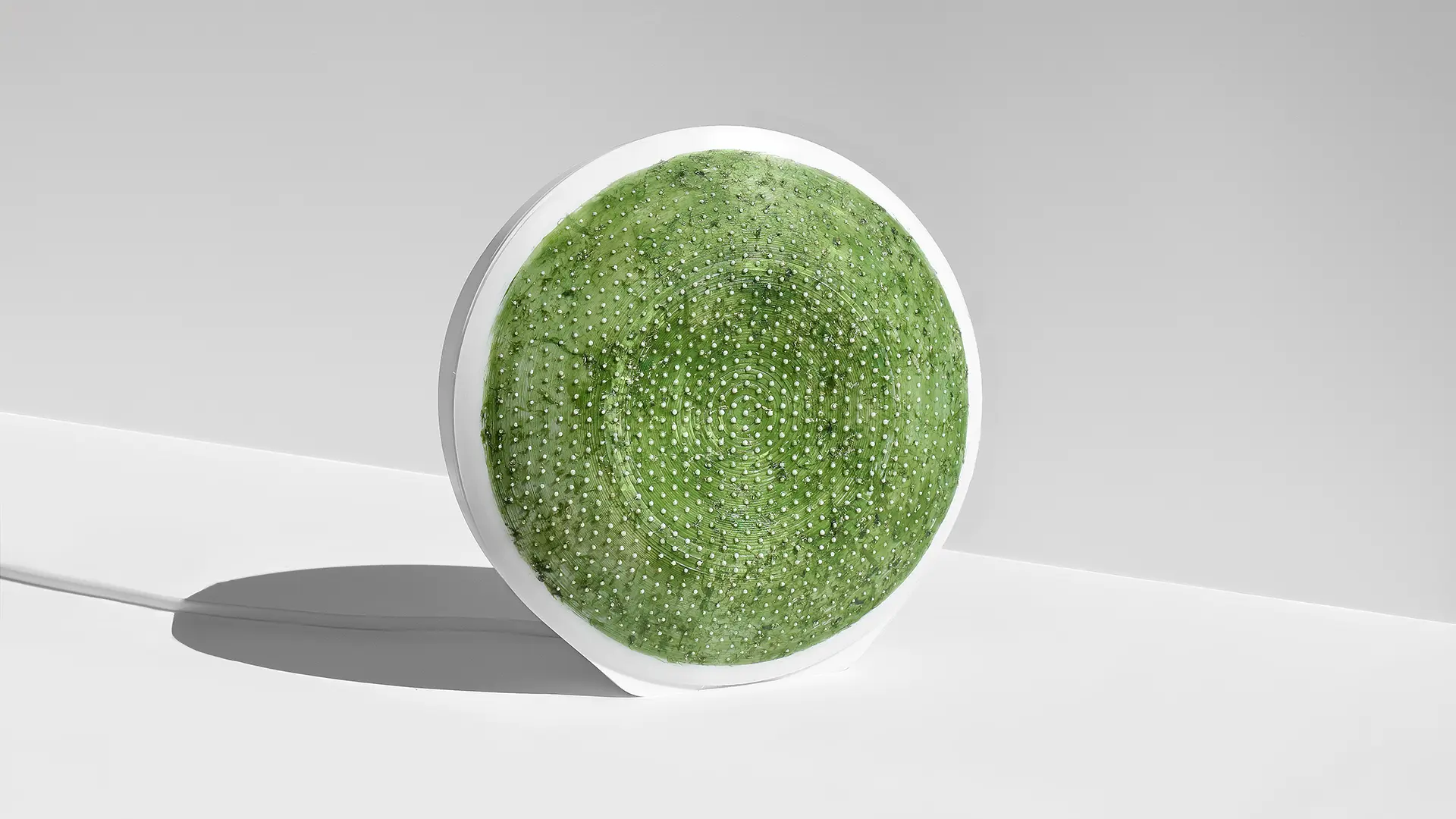
My bachelor's thesis examined the integration of living biological elements in the form of microalgae into the design process of products.
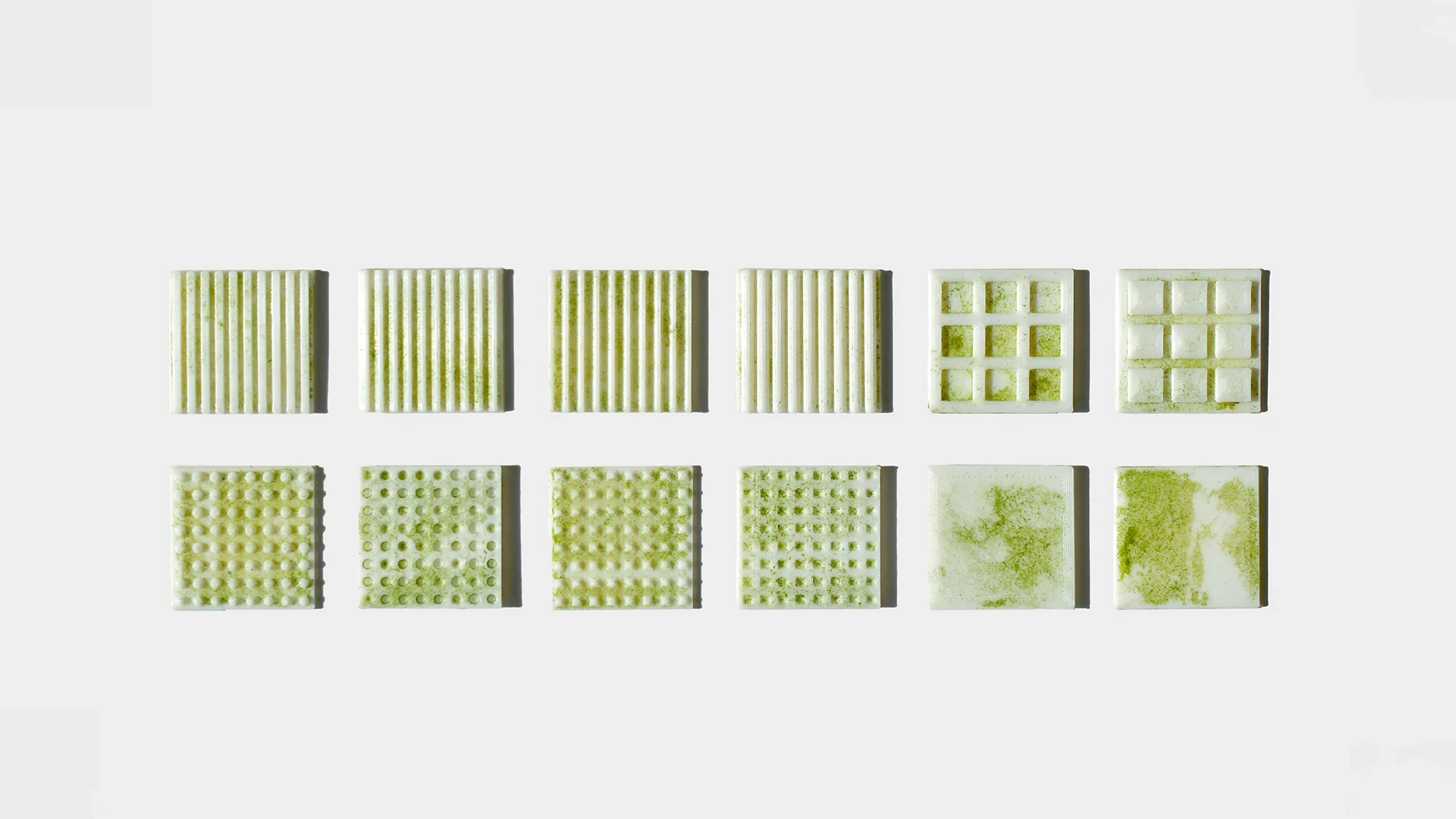
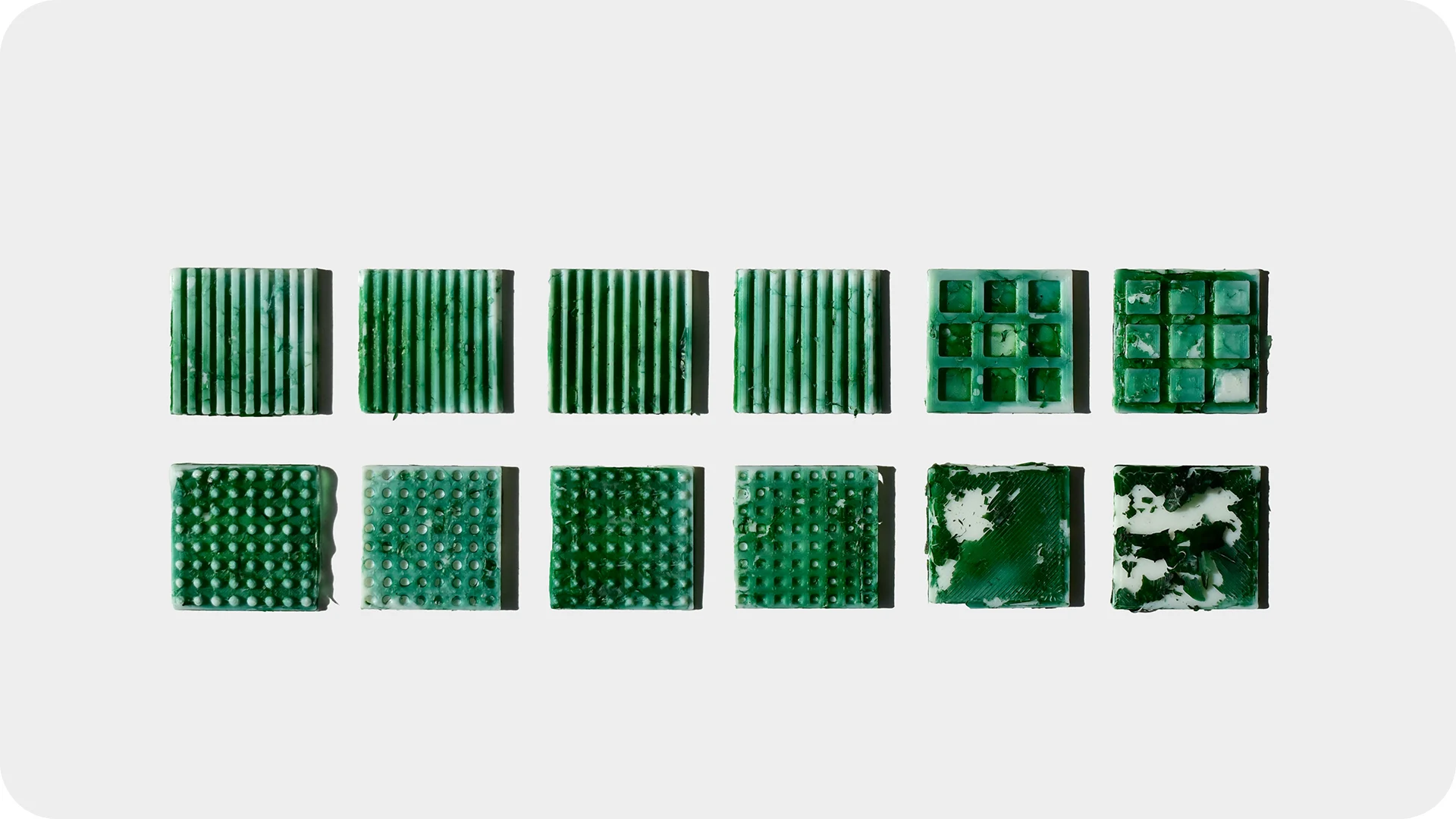
I used FDM 3D printing process to create test objects, exploring surface structures and factors like light transmission for microalgae adhesion.
The project was co-developed with the IZI-BB Fraunhofer Institute. The final result of the bachelor thesis serves as an exhibition piece in the IZI-BB laboratory for the interdisciplinary cooperation between biology and design.
Concept
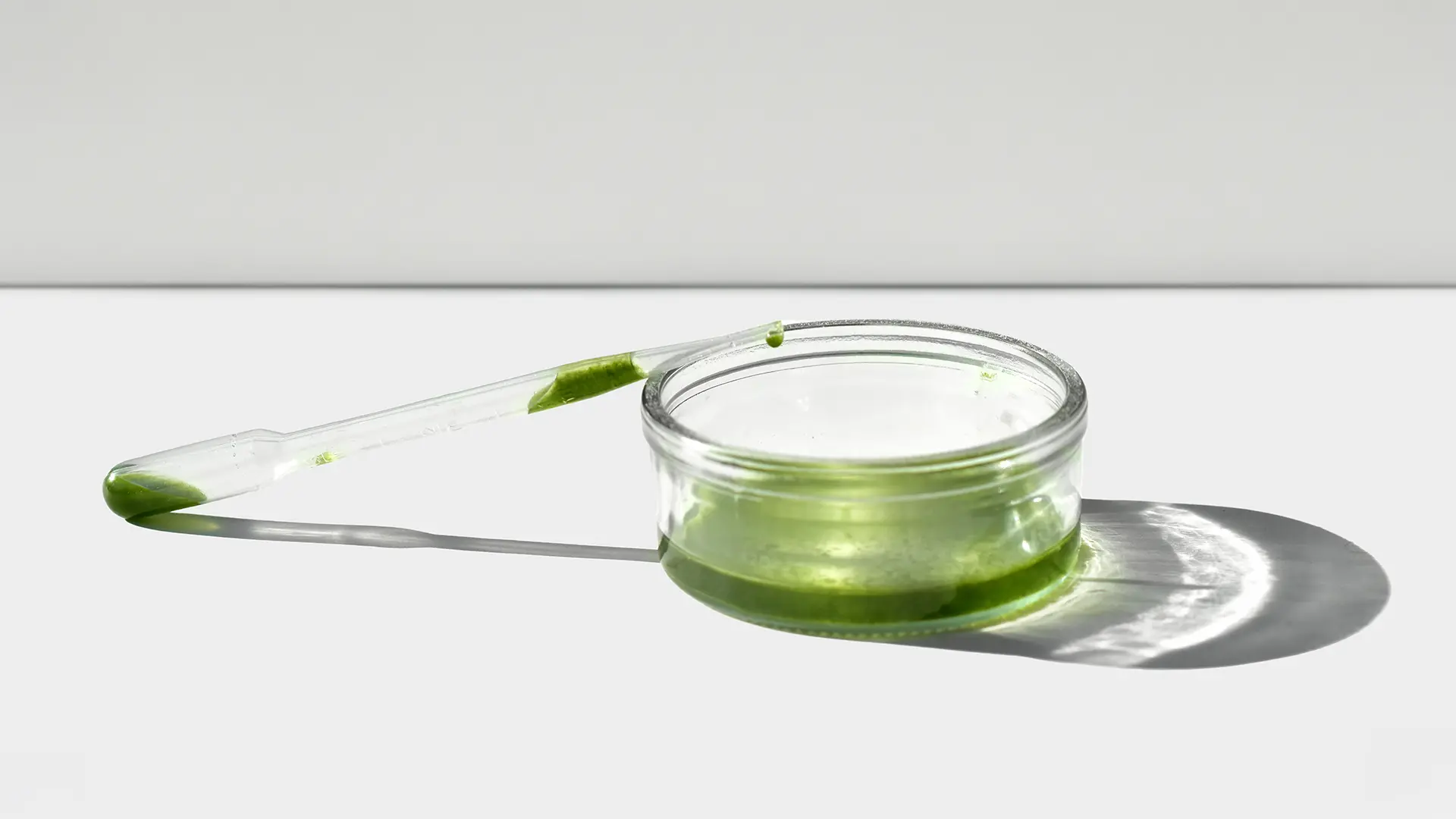
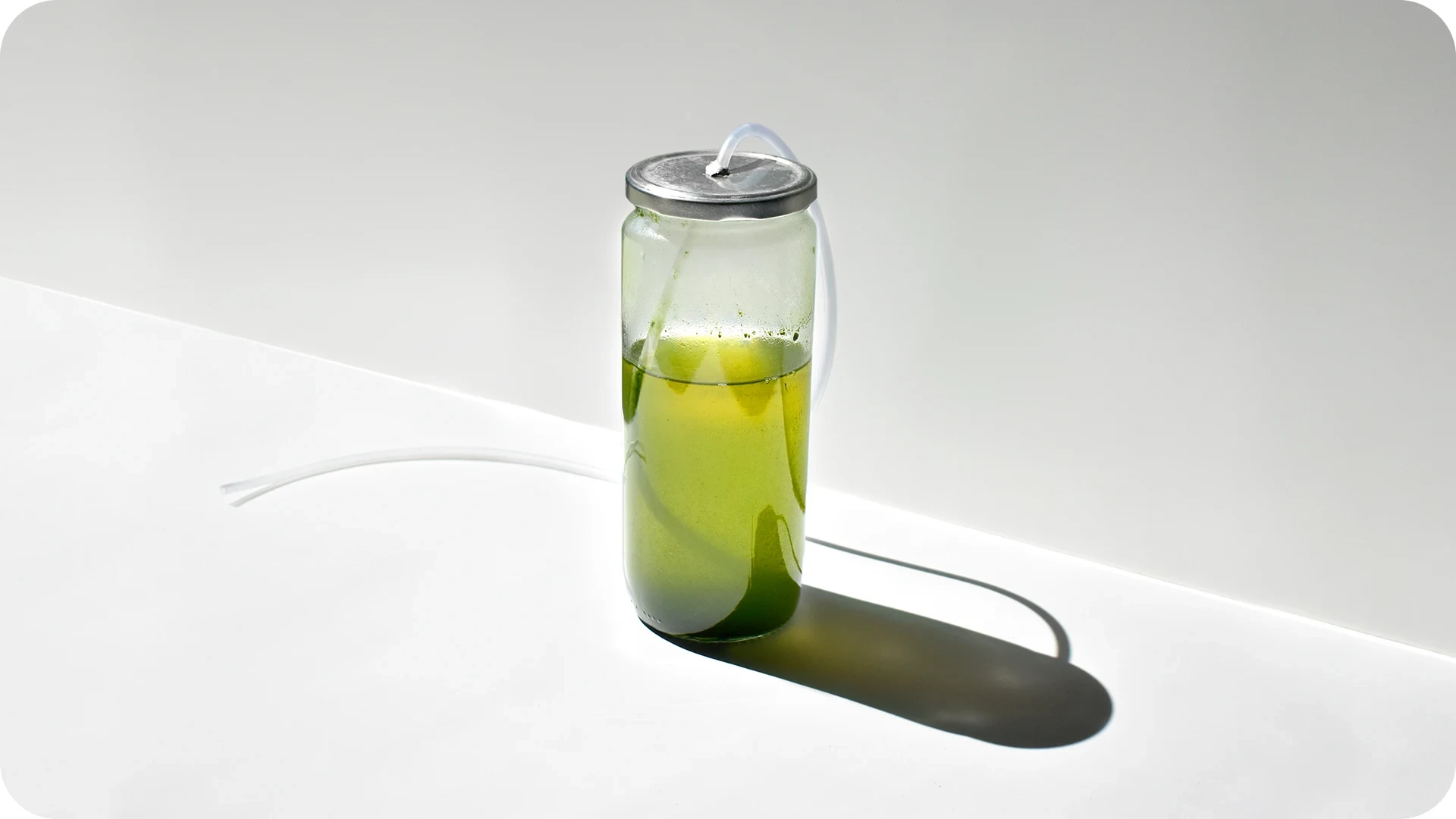
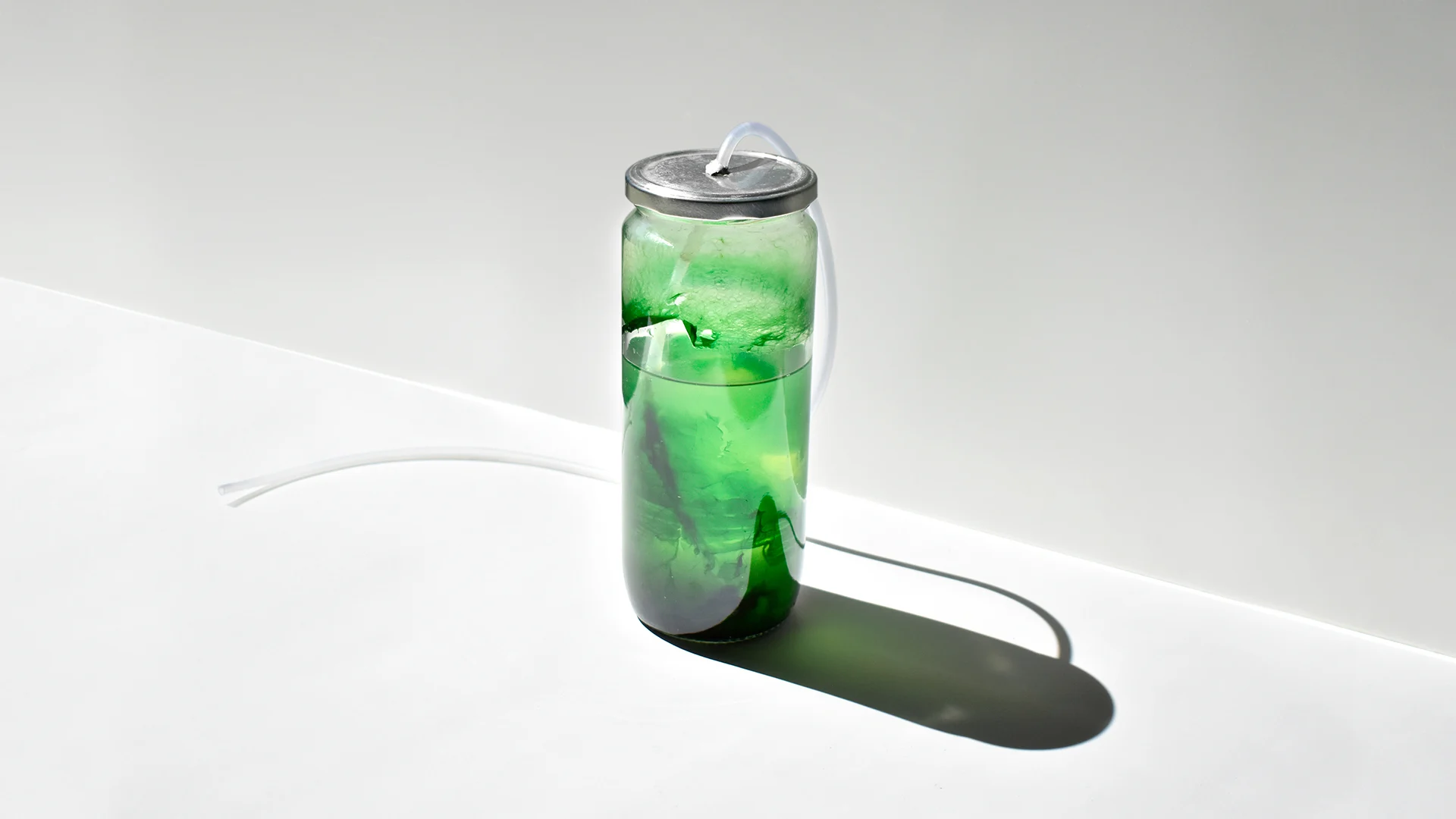
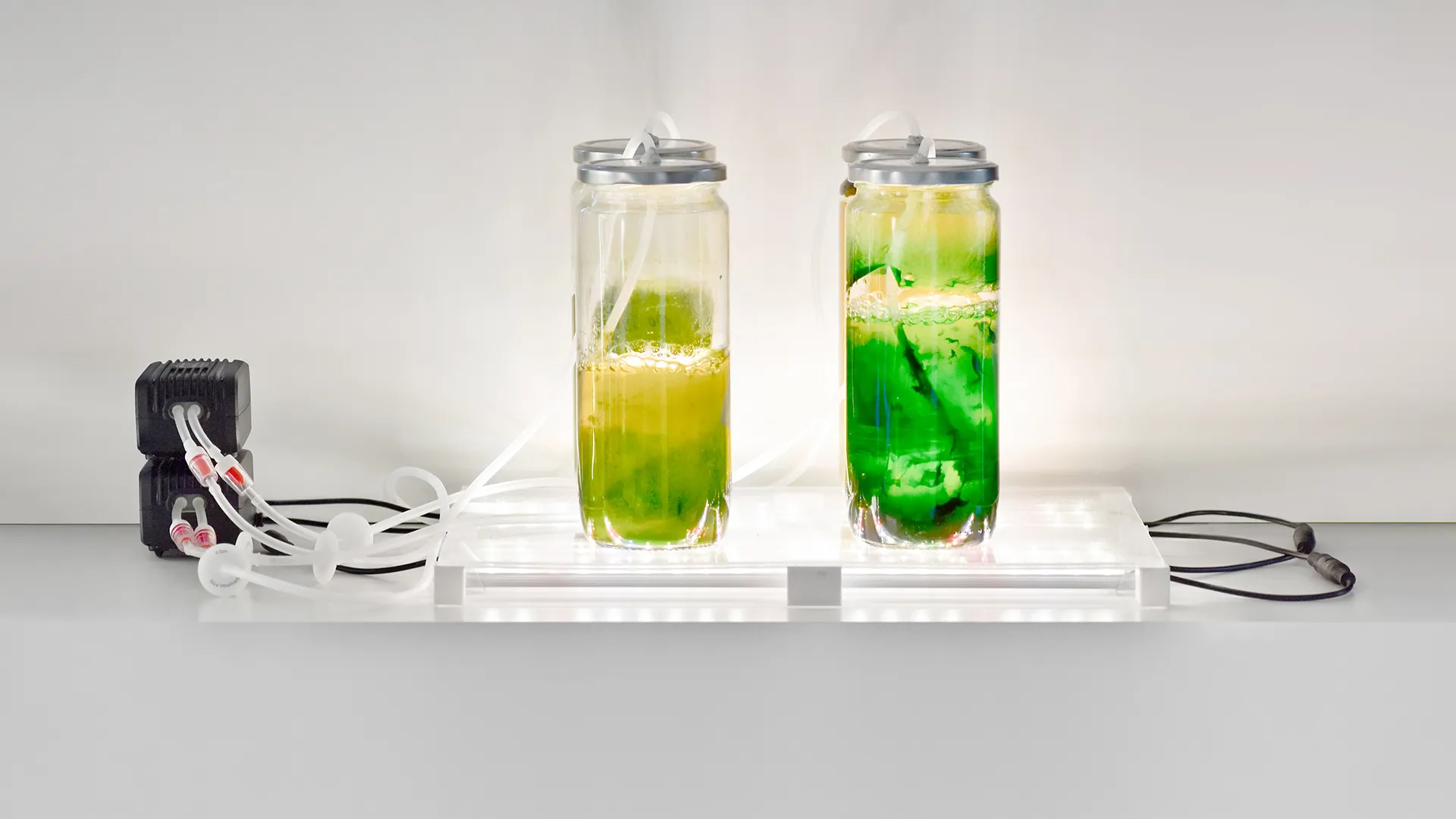
The algae required for the research process were grown independently in a custom build bioreactor. As part of a collaboration with the IZI-BB of the Fraunhofer Institute, the base algae strains were first cultivated and provided by Dr. Thomas Leya.
Light has also been shown to influence the adhesion of certain algal species. In photobioreactors, algae tend to form biofilms on light-exposed surfaces, which is undesirable in industrial cultivation because these biofilms reduce light penetration into the reactor. As a result, free-floating algae receive less light and their photosynthetic activity decreases. In this study, however, this adhesion behavior is intentionally exploited and further encouraged through the experimental setup and sample design.
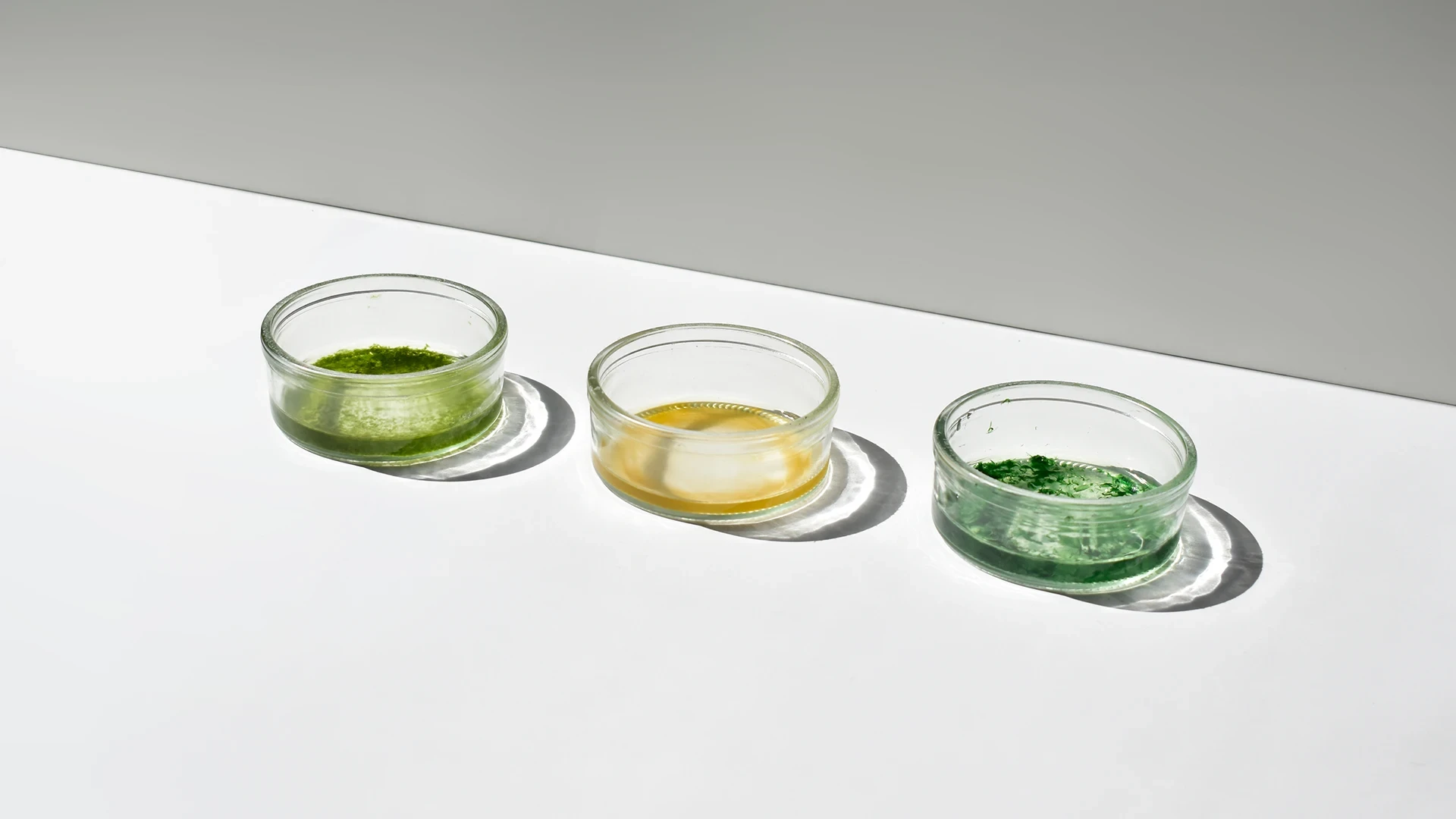
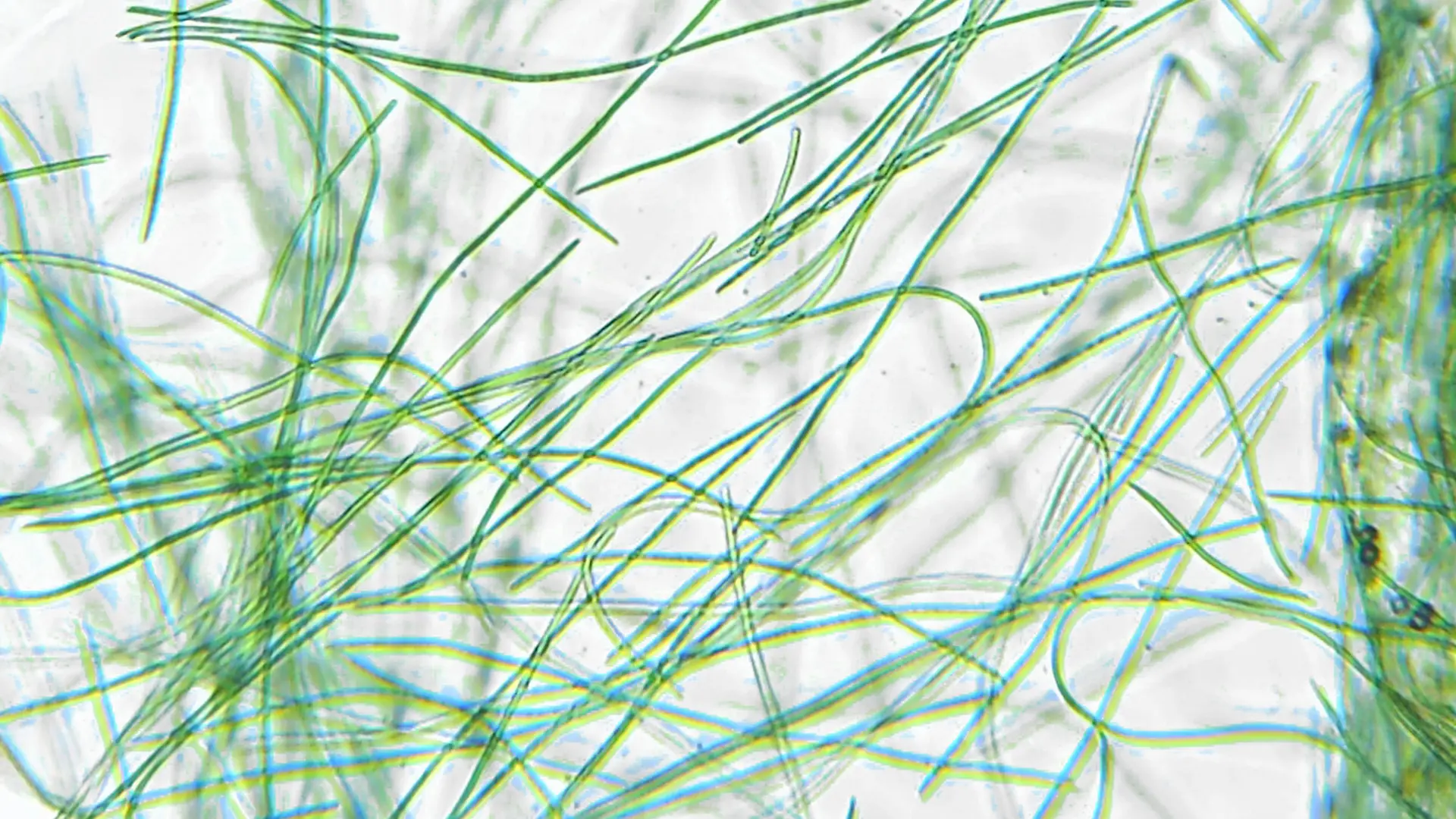
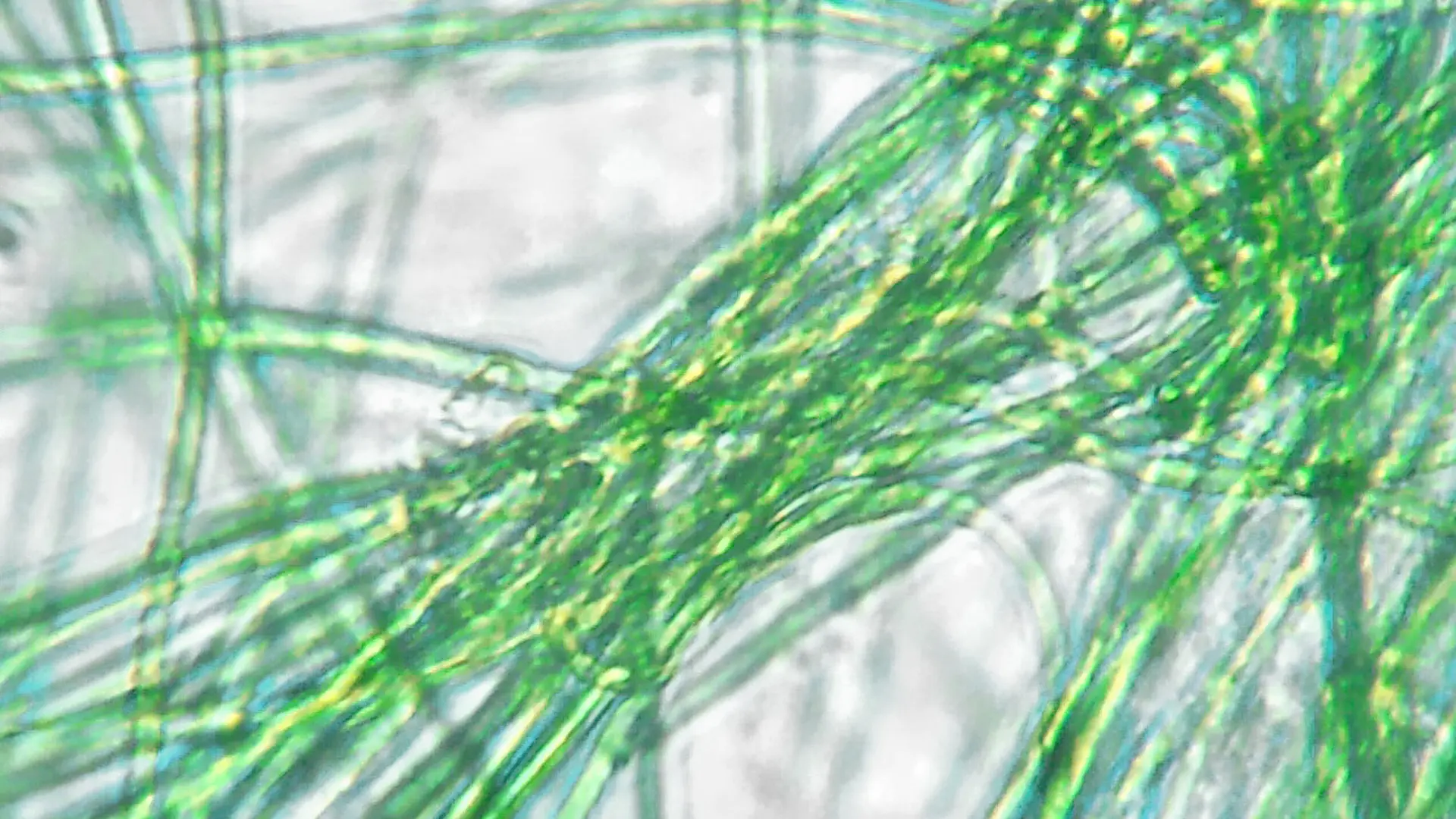
Algae strains:
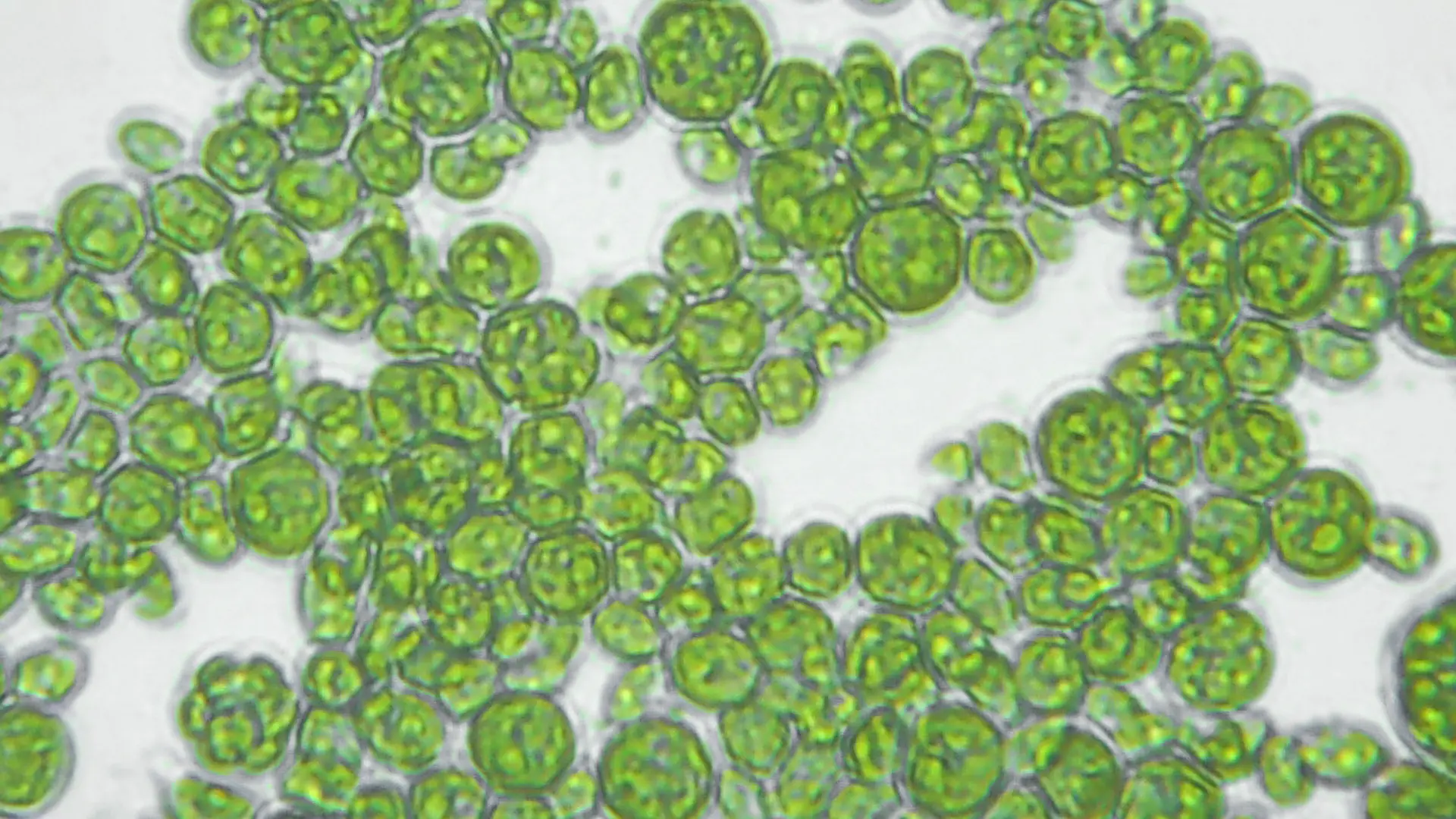
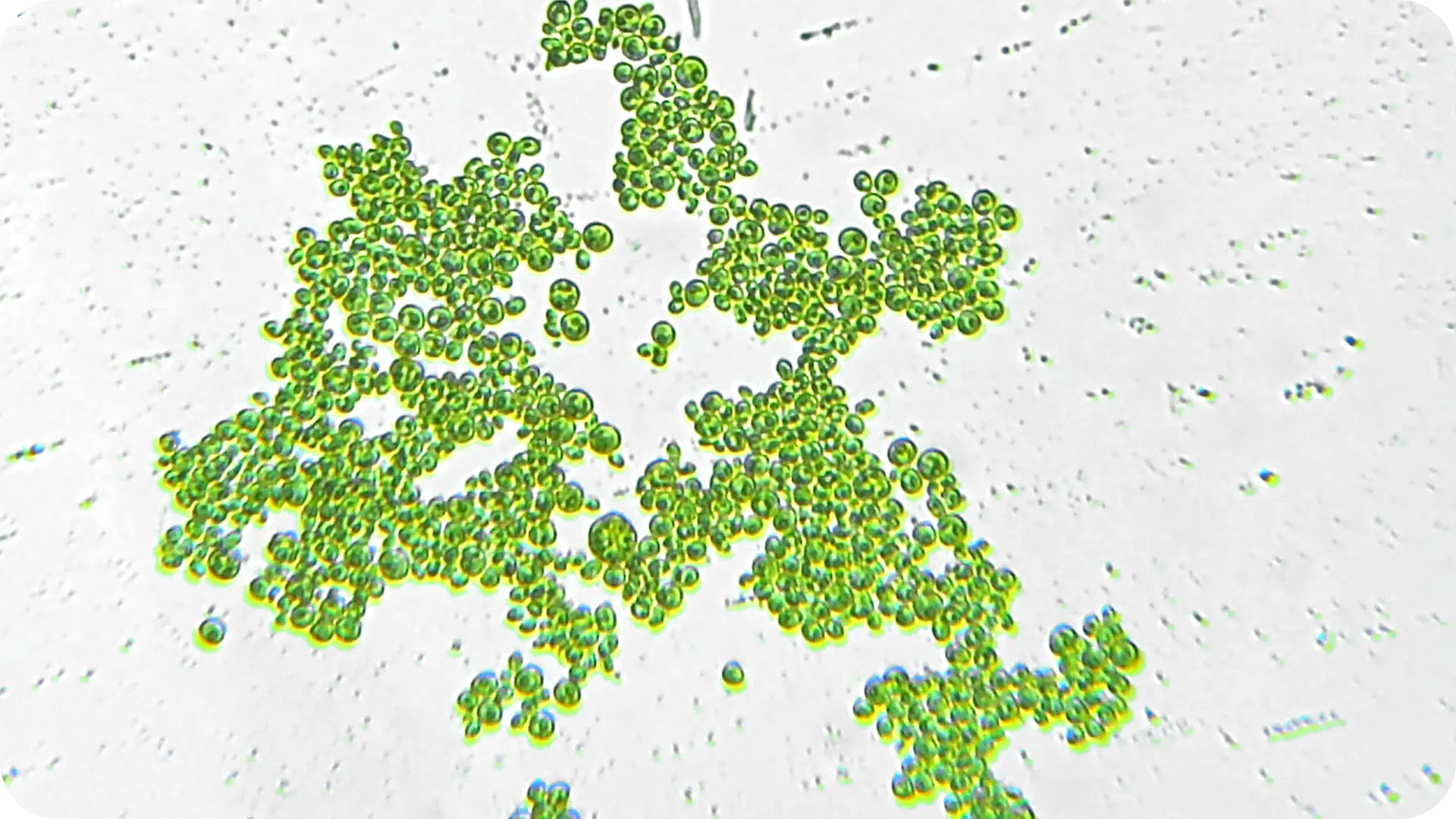
Green algae | cf. Sphaerocystis sp. Chodat
Cyanobacteria | Desertifilum tharense
Concept
The FDM 3D printing process was used to produce a series of test objects to which the microalgae would adhere. The process offered the opportunity to explore different surface structures and other factors such as light transmission.
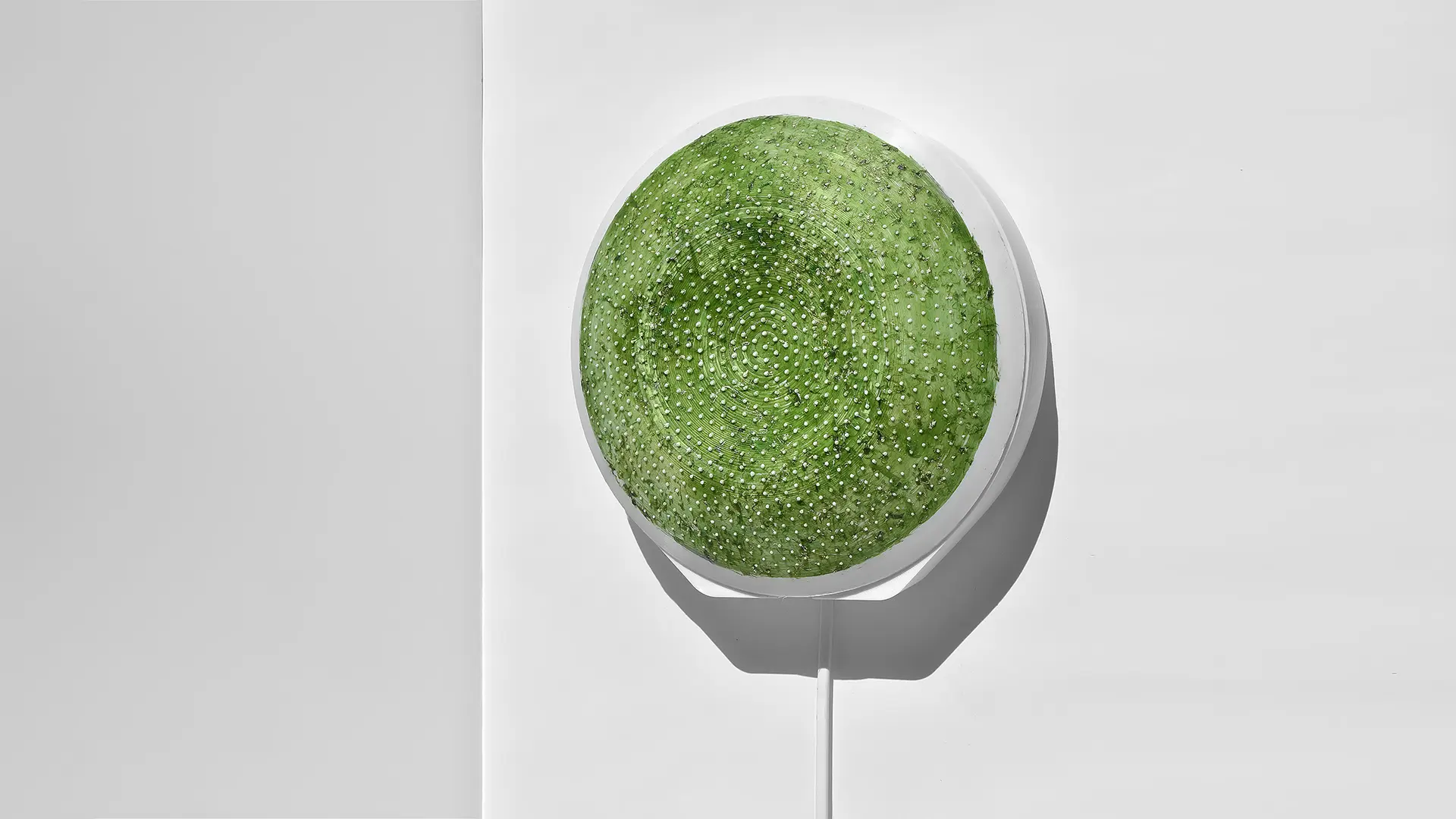
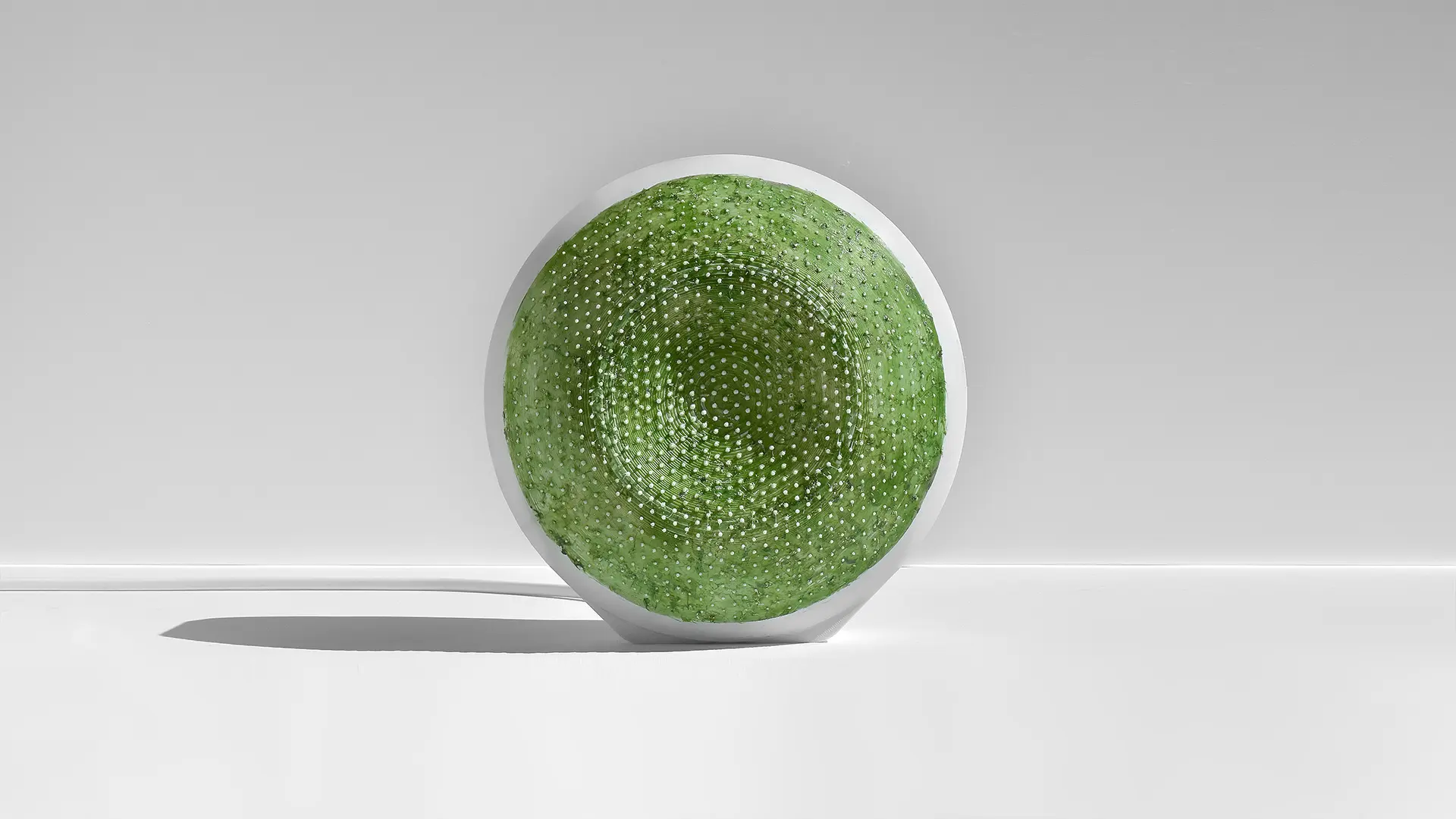
The final outcome of the project was a luminaire. It's design integrates principles of biodesign with aspects of biomorphism, drawing formal inspiration from microalgae as a natural model. A light fixture was chosen as a functional product with a clear application, reflecting the essential role of light in both algal cultivation and experimentation. Throughout the project, light proved to be a decisive factor: it stimulates algal phototaxis, encouraging algae to settle on illuminated, 3D-printed surfaces and thereby enabling the realization of the design itself. This fundamental relationship between light, algae, and form became the conceptual core of the final product.